
By: Adriana Stimax
“I’m bored.” For anyone who spends time with kids, the phrase is familiar. It often arrives at the end of an activity, and carries with it an unspoken question: What are we doing next?
As adults, we are quick to answer. We plan carefully to keep kids (and ourselves) engaged, moving, and doing. In outdoor spaces, that preparation matters. But sometimes, so does the space in between.
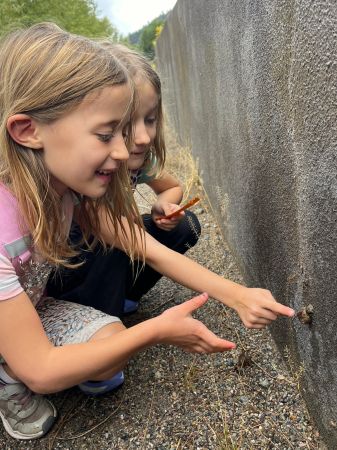
If we fight the urge to immediately fill that space, something interesting can happen. First comes the resistance. “There is nothing to do! This is boring! How much longer are we staying here?” With patience and maybe a guiding question, eventually somebody notices something. Are there bugs under the rocks? Does anyone live in that log? One child notices a strange track, another starts turning over rocks, and before long the group that had “nothing to do” is completely absorbed.
Then come the questions. Do ants sleep? Who made this hole? Why is this tree growing that way? Not every discovery leads to a tidy lesson and not every question needs an answer. Sometimes the important part is simply that they noticed enough to wonder.
There is a progression there that feels important. It starts where boredom makes space for noticing. From noticing, curiosity grows which builds familiarity. Finally, familiarity can become care.
That may be one of the quieter ways stewardship begins. We often talk about stewardship in terms of actions like staying on the trail, packing out trash, and respecting wildlife. Don’t get me wrong, those things matter! Yet before someone cares for a place, they usually have to form a relationship with it. A forest is easier to dismiss when it is postcard scenery. It becomes harder when you know where the mushrooms grow after a rain, which log hides beetles underneath its bark, or where you once spent twenty minutes trying to catch a crayfish with your friends. Those experiences make a place meaningful.
Kids make this process easy to see, and they are certainly not the only ones who need room for it. Adults are pretty good at avoiding boredom too. Be honest – how many of us hike toward a destination all while tracking mileage and listening to something through our headphones? When we stop at the overlook, we take the photo and move on. Even time outdoors can become transactional with another trail completed, another summit reached, another thing checked off the list.
There is nothing wrong with having a destination. Goals can draw us outside and take us to extraordinary places. However, when the objective becomes the whole experience we risk moving through a landscape without really being present in it. Stewardship suffers when a place becomes something we merely use.
Fall feels like a good season to practice something different. The pace of summer begins to soften and we can take time to notice what’s around us. The landscape is doing a hundred small things from making seeds that cling to our socks to leaves changing one at a time before falling. You just have to stay put long enough to notice.
So this fall, I challenge you to be bored. You can start by taking a walk without worrying quite so much about where it ends. Leave the headphones behind and find a place to sit where you can’t be productive. Let yourself have a few minutes when there really isn’t anything to do. You might feel restless at first and that’s ok! Stay there a little longer and see what catches your attention. Notice which birds are still around, which plants have gone to seed, or how a familiar place has changed since the last time you stopped to really look at it.
Stewardship doesn’t always begin with doing something for the land. Sometimes it begins by paying attention to it long enough for it to become a place we know. Once a place matters to us, caring for it tends to follow.
Adriana Stimax is SJMA’s Education Director and is passionate about connecting youth to the natural world through hands-on outdoor experiences and environmental stewardship.


