Lessons that Stick
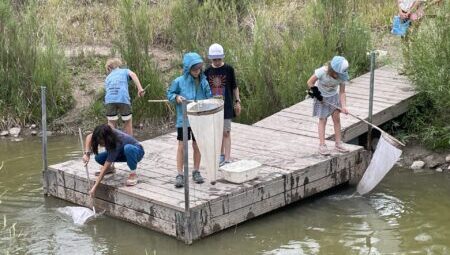
On a warm Saturday morning, a family arrived at our Durango Nature Center. The parents said they’d never been before, but their kids had attended a San Juan Mountains Association (SJMA) summer camp and insisted on showing them the place. The children raced down the hill toward the pond, chattering about favorite activities from camp. When the youngest veered to cut a switchback and step off the trail, an older sibling stopped them, saying matter-of-factly, “We learned not to do that. It hurts the plants.” The correction was gentle and immediate, much to the surprise of the parents.
That tiny moment is why education is one of the strongest tools we have for caring for public lands. Rules and signs have their place, but understanding why sticks with them. When people learn what’s at stake whether it’s water quality, wildlife habitat, fragile tundra, or wildfire risk, they make better choices even when no one is watching.
SJMA’s tagline “Explore, Learn, Protect” isn’t just a slogan we tuck into brochures. Each word is important in helping people arrive at stewardship. The “Learn” in our tagline is the bridge between loving a place and protecting it. Education happens as both big, planned experiences and as quick, human moments with everything from large school field trips where students practice observation, mapping, and confidence-building in the woods to a brief conversation at a trailhead, a chat at a visitor desk, or a gentle reminder along the Alpine Loop.
Summer is when that educational bridge gets busiest. Mountains and canyons fill with locals chasing wildflowers and visitors escaping heat elsewhere, and land-management partners are stretched thin. Community-based education becomes practical stewardship. When an SJMA Ambassador explains why you should pack out dog waste they’re preventing bacteria from running into streams after the next storm. When someone learns to stick to durable surfaces, they help prevent new social trails from braiding into meadows and tundra.
You might wonder why we’re talking about summer in February. This is when we plan and prepare (the first step of Leave No Trace) by building curricula, corroborating with partners, and lining up the hands it takes to run meaningful programs. Registration for many summer youth offerings opens in February and March, so now’s the time to explore options and claim a spot.
This summer, SJMA will again offer chances to learn in the field. Naturalist-led walks and pop-up programs at sites like the Durango Nature Center and Haviland Lake slow us down enough to notice the small stuff like how a Clark’s nutcracker caches thousands of seeds, or how fungi and roots exchange nutrients underfoot. Those details change how a place feels. Once you know them, it’s harder to treat the landscape like a disposable backdrop (or trash can).
Outdoor education benefits everyone. Kids who learn to read tracks, identify a pine cone, or find a watershed on a map aren’t just absorbing facts, they’re building a relationship with the land. I’ve watched students return and proudly teach their parents the same Leave-No-Trace habits they practiced with us. That’s the ripple effect we’re after.
When you see an SJMA educator, Visitor Information Specialist, or Ambassador out in the world, say hello. Don’t be afraid to ask your questions and share your wonder. Summer is our outdoor classroom, and the lessons that stick are the ones we learn together. To find program schedules and ways to get involved, visit sjma.org.
Adriana Stimax is SJMA’s Education Director and is passionate about connecting youth to the natural world through hands-on outdoor experiences and environmental stewardship.
- Published in Education
